As an Amazon Associate, we earn from qualifying purchases. Some links on this site are affiliate links at no extra cost to you. Our recommendations are based on thorough research and editorial judgment.


What Should Bulldog Puppies Eat: Wet or Dry?

Bulldog puppies should eat a balanced diet that includes both wet and dry food, as each presents unique benefits vital for their growth and health. Wet food offers high moisture content, aiding hydration and palatability, which is beneficial for picky eaters. Meanwhile, dry food promotes dental health by reducing plaque build-up and is generally more cost-effective. Mixing both types provides variety and balanced nutrition. It's important to monitor portion sizes and adjust feeding schedules according to your puppy's age and activity level. To optimize your puppy's diet, explore tailored feeding strategies and health considerations further.
Key Takeaways
- Bulldog puppies benefit from both wet and dry food, offering hydration and dental health advantages, respectively.
- Wet food is highly palatable and easier to chew, aiding in nutrition for developing puppies.
- Dry food promotes dental hygiene through chewing, helping reduce plaque buildup.
- Mixing wet and dry food provides a balanced diet with varied textures and essential nutrients.
- Always consult with a veterinarian for tailored dietary recommendations based on your puppy's specific needs.
Nutritional Needs of Bulldog Puppies
You may be interested


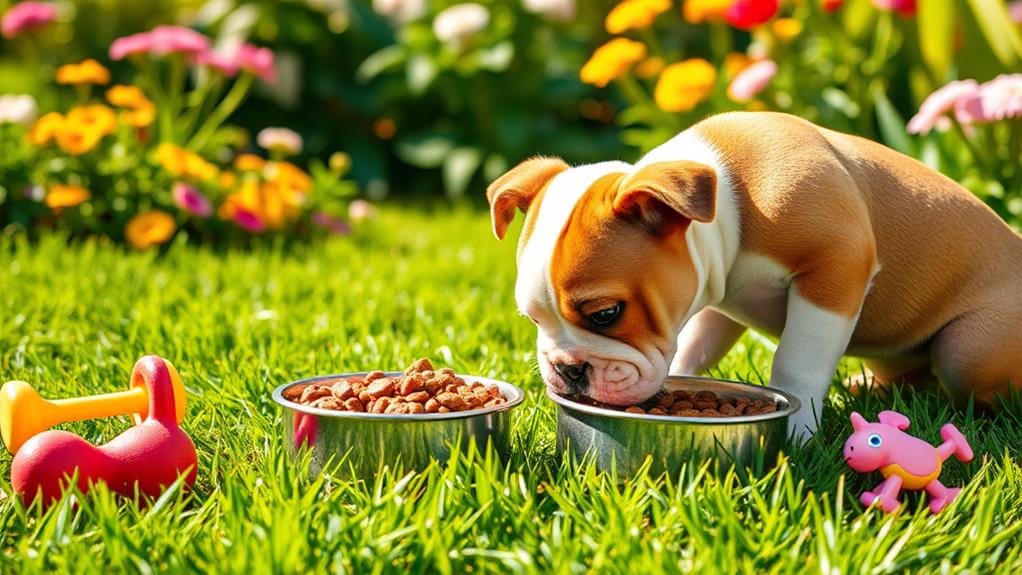
From a young age, bulldog puppies have specific nutritional needs that are essential for their growth and development. To guarantee your puppy thrives, focus on providing a balanced diet rich in essential nutrients.
- Protein and Fat: Aim for a minimum of 22% protein and 8% fat in their food.
- Vitamins and Minerals: Include vitamins A, B, C, D, E, K, and minerals like calcium and phosphorus for strong bones.
- Daily Calories: Monitor their caloric intake, which typically ranges from 900 to 1,600 calories, depending on activity and growth stage.
Transitioning from nursing to solid food should occur around 3-4 weeks of age. Regular veterinary check-ups will help assess their dietary needs and growth.
Benefits of Wet Food

Wet food stands out as an excellent option for bulldog puppies due to its numerous benefits. Here are some key advantages:
- Hydration: With approximately 70% moisture content, wet food helps keep your puppy hydrated, reducing the risk of urinary infections.
- Palatability: Its appealing taste encourages even the pickiest eaters to consume their meals, improving overall nutrition intake.
- Ease of Chewing: Wet food is soft and easy to chew, making it suitable for puppies with developing teeth or older dogs with dental issues.
- Balanced Nutrition: Many wet food options are formulated with essential vitamins and proteins, ensuring balanced nutrition that supports healthy growth.
Choosing wet food can greatly enhance your bulldog puppy's diet and overall well-being.
Advantages of Dry Food

Choosing dry food for your bulldog puppy can offer several distinct advantages that contribute to their overall health.
- Dental Hygiene: The chewing action required for dry food helps reduce plaque buildup, promoting better oral health for your puppy.
- Essential Nutrients: Dry food is formulated to provide essential nutrients, including fats, carbohydrates, and vitamins vital for their growth and development.
- Cost-effective Option: Compared to wet food, dry food is typically more affordable, making it a practical choice for budget-conscious puppy owners.
- Shelf Life: Dry food generally has a longer shelf life, allowing for easier storage without spoilage concerns.
- Hydration: It encourages fresh water intake, which is important for maintaining hydration and overall wellness in bulldog puppies.
Mixed Feeding Benefits

Mixed feeding offers a balanced approach to your bulldog puppy's diet by combining the benefits of both wet and dry food. Here are some significant benefits to reflect upon:
- Hydration: Wet food provides essential moisture, supporting hydration.
- Dental Health: Dry food helps reduce plaque buildup, promoting oral health.
- Nutritional Variety: Mixing both types increases essential nutrient intake, including proteins, fats, and vitamins.
- Cost Efficiency: It allows you to balance expenses between wet and dry food while ensuring a well-balanced diet.
Tips for Feeding Bulldogs

When feeding bulldog puppies, it's essential to maintain a nutritional balance that meets their growth needs. You should also consider hydration, as a mix of wet and dry food can help keep them adequately hydrated while providing varied textures. Establishing a consistent feeding schedule is important, as puppies typically require 3-4 meals per day during their early development stages.
Nutritional Balance Importance
A balanced diet is crucial for the healthy growth and development of bulldog puppies. To meet their dietary requirements, consider these key points:
- Aim for at least 22% protein and 8% fat in their food.
- Mix wet and dry kibble for ideal nutrition and flavor.
- Monitor portion sizes: ½ to 1 cup daily for puppies, increasing as they grow.
- Consult your vet regularly to customize their diet based on individual needs.
Incorporating a variety of textures helps keep your puppies engaged with their meals, preventing food boredom. By ensuring they receive a well-rounded diet, you're setting the foundation for their long-term health and wellness. Remember, the right food choices contribute considerably to their overall well-being.
Hydration Considerations
Ensuring your bulldog puppy stays hydrated is just as important as providing balanced nutrition. Wet food contains about 70% water, which aids in hydration and lowers the risk of urinary infections.
Here are some tips to enhance your puppy's moisture intake:
- Always provide fresh water alongside meals. Puppies may not drink enough on their own, especially if they prefer wet food's moisture.
- Experiment with different water bowls or consider using a dog water fountain to encourage drinking.
- Mixing wet food with dry kibble combines the benefits of both, enhancing moisture intake while promoting dental health.
- Monitor your puppy's urine color; a normal pale yellow indicates adequate hydration, even if water consumption seems low.
Feeding Schedule Recommendations
Establishing a consistent feeding schedule for your bulldog puppy is essential for their growth and overall health. Here are some recommendations to help you:
- Start shifting from mother's milk to solid food around 3-4 weeks.
- Introduce puppy mush (3:1 water to dry kibble) by week 4.
- Wean your puppy by week 9, aiming for three meals daily.
- Establish a fixed feeding schedule by week 10, progressing to 3-4 meals daily by week 11.
Monitor the amount of food based on their weight, which should be between 9-12 pounds at this age. Adjust portions as necessary to meet their daily caloric needs, ensuring you provide the best food for ideal health.
Common Feeding Mistakes

When it comes to feeding bulldog puppies, many owners inadvertently make critical mistakes that can impact their growth and health. Here are some common feeding mistakes to avoid:
- Neglecting a Balanced Diet: Confirm your puppy's food has at least 22% protein and 8% fat for ideal growth.
- Poor Portion Control: Overfeeding leads to obesity; puppies typically need ½ to 1 cup daily, increasing to 2-4 cups as they grow.
- Abrupt Food Changes: Gradually introduce new wet or dry food over several days to prevent digestive upset.
- Relying Solely on One Food Type: Mix wet and dry food for hydration and nutrient diversity.
- Ignoring Water Needs: Always provide fresh water, especially when feeding dry food, to prevent dehydration.
Monitoring Puppy Health

Feeding your bulldog puppy properly is just one part of ensuring their overall well-being. Monitoring puppy health is essential to their growth and development. Here are some key areas to focus on:
- Weight Tracking: Regularly check that your puppy stays within the healthy weight range of 12-18 pounds by 12 weeks of age.
- Hydration Status: Observe your puppy's urine color; pale yellow indicates proper hydration.
- Vet Check-Ups: Schedule routine visits to assess dietary needs and overall health, especially during rapid growth phases.
- Eating Habits: Track any changes in stool consistency, as these may signal dietary sensitivities or health issues requiring veterinary attention.
Choosing the Right Food
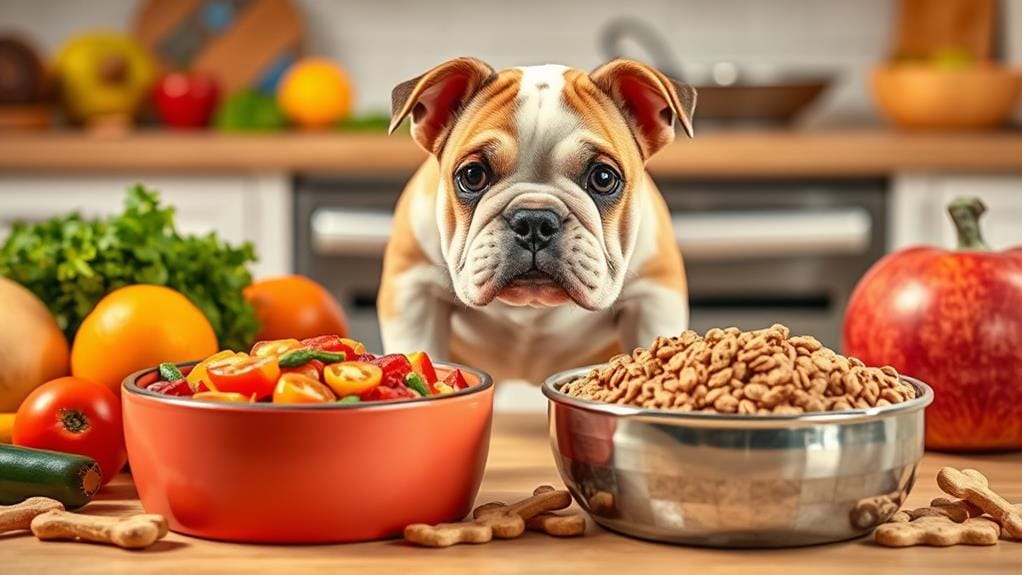
Choosing the right food for your bulldog puppy is crucial for their growth and health. When considering dog food for English Bulldog puppies, you want to make sure it contains at least 22% protein and 8% fat. Both wet and dry food can meet these nutritional standards.
- Wet food: Offers hydration, containing about 70% water, which is essential for young puppies.
- Dry food: Promotes dental hygiene by reducing plaque buildup through chewing.
A mixed feeding approach, combining wet and dry food, can enhance palatability and provide diverse nutrients. Don't forget to consult a veterinarian; they can offer tailored advice based on your puppy's specific health needs and dietary restrictions, making sure you make the best choices for your furry friend.
Frequently Asked Questions
Is Dry or Wet Food Better for Puppies?
When considering dry or wet food for your puppy, remember that dry food benefits dental health and ingredient quality, while wet food drawbacks include less dental support. Balance puppy nutrition and adjust feeding frequency as needed.
Is Wet Food Good for English Bulldogs?
Yes, wet food's great for your English Bulldog! It boosts nutritional value, suits feeding frequency, supports dental health, and caters to taste preference. Just guarantee you're choosing high-quality ingredients to keep your pup healthy and happy.
What Is the Best Diet for an English Bulldog Puppy?
To nourish your English Bulldog puppy, think of a balanced feast—harmonizing nutritional requirements, a consistent feeding schedule, thoughtful portion sizes, and ingredient quality, while gently watching for any food allergies that might arise.
When Can Puppies Eat Dry Good?
You can start your puppy on dry food around 4-6 weeks, ensuring a smooth food shift for ideal puppy digestion. Maintain a feeding schedule that supports their nutritional balance and promotes healthy puppy growth.