As an Amazon Associate, we earn from qualifying purchases. Some links on this site are affiliate links at no extra cost to you. Our recommendations are based on thorough research and editorial judgment.


5 Best Dog Foods for Gassy Bulldogs: Vet-Approved Solutions for 2026

For gassy Bulldogs, veterinarians recommend specialized diets to alleviate digestive issues. Top choices include Royal Canin Bulldog Adult Dry Dog Food, formulated with digestible proteins and precise fiber content. Royal Canin French Bulldog Adult and Puppy varieties offer breed-specific kibble shapes and digestive support. Bully Max High Performance Premium Dry Dog Food provides high-quality protein and fat content suitable for all ages. Bully Max High Protein Puppy Food caters to growing Bulldogs with sensitive stomachs. When selecting, consider factors like ingredient digestibility, fiber balance, protein quality, and kibble size. Proper food choice can greatly reduce flatulence and improve overall gut health. Further exploration of these options will reveal additional benefits for your Bulldog's digestive well-being.
Key Takeaways
- Royal Canin Bulldog Adult Dry Dog Food reduces gas with highly digestible proteins and precise fiber content.
- Royal Canin French Bulldog Adult Dry Dog Food promotes skin barrier health and reduces flatulence in adult French Bulldogs.
- Royal Canin French Bulldog Puppy Dry Dog Food supports digestive health with easily digestible proteins for puppies.
- Bully Max High Performance Premium Dry Dog Food offers high protein content and quality ingredients suitable for all ages.
- Foods with balanced fiber content (3-5%) and probiotic supplementation can significantly reduce gas in Bulldogs.
Royal Canin Bulldog Adult Dry Dog Food, 30 lb bag
You may be interested
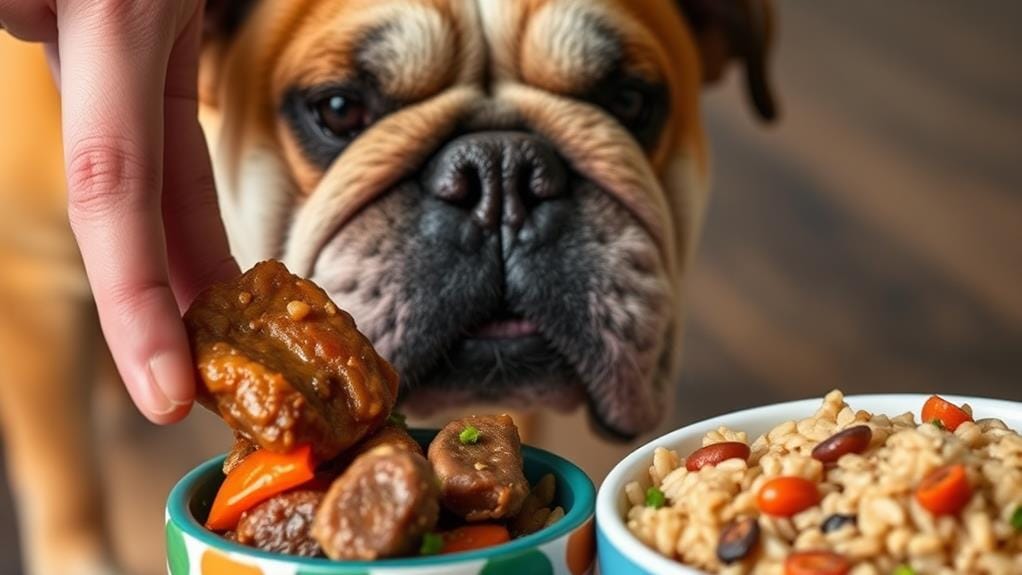
This is Royal Canin's breed-specific formula for adult Bulldogs, and it's a reasonable starting point on this list since digestive support is baked into the base formula rather than a specialty add-on:
The fiber content and digestible proteins are aimed at reducing gas and stool odor, and the wave-shaped kibble suits Bulldogs' jaw structure. It also covers skin and joint support, which is a bonus but secondary to the gas-reduction angle this list is focused on.
Verdict: A solid all-around choice if gas is one of several concerns you're managing, not just the primary one.
Best For: Adult Bulldogs aged 12 months and older seeking breed-specific nutrition tailored to their unique physical characteristics and digestive needs.
Pros:
- Specialized kibble shape designed for Bulldogs' unique jaw structure
- Formulated to promote digestive health and reduce gas
- Contains nutrients to support skin, coat, bone, and joint health
Cons:
- May be more expensive than non-breed-specific dog foods
- Large 30 lb bag size might not be suitable for single-dog households
- Limited to one life stage (adult), requiring a different food for puppies or seniors
Royal Canin French Bulldog Adult Dry Dog Food (17 lb)
Unlike the general Bulldog formula above, this one is built specifically for French Bulldogs, with a kibble shape matched to their shorter muzzle:
Key features include:
- Customized kibble shape for French Bulldog's short muzzle
- Protein and L-carnitine for muscle tone support
- Exclusive nutrients promoting skin barrier health
- Highly digestible proteins and precise fiber content
It's rated 4.7 out of 5 stars from over 2,700 reviews, with a formula explicitly aimed at reducing flatulence and stool odor — directly relevant to the topic of this post.
Verdict: The most targeted option here if your gassy dog is specifically a French Bulldog.
Best For: Adult French Bulldogs over 12 months old seeking breed-specific nutrition to support muscle tone, skin health, and digestive wellness.
Pros:
- Customized kibble shape for French Bulldog's unique jaw structure
- Contains specific nutrients for muscle support and skin barrier health
- Helps reduce flatulence and unpleasant stool odors
Cons:
- May be more expensive than non-breed-specific dog foods
- Limited to one flavor option (chicken)
- 17 lb bag size might be too large for some households
Royal Canin French Bulldog Puppy Dry Dog Food, 10.5 lb Bag
This is the puppy version of the French Bulldog formula above, for Frenchies aged 8 weeks to 12 months, with the same emphasis on reduced gas and stool odor:
Key benefits include:
- Immune system support through antioxidants, including vitamin E
- Skin barrier reinforcement with essential nutrients
- Highly digestible proteins and precise fiber content to reduce gas and stool odor
The 10.5 lb bag runs pricier than a generic puppy food, and some buyers report bags arriving lighter than expected.
Verdict: A good choice if your gassy puppy is specifically a French Bulldog and you want the digestive benefits to start early.
Best For: French Bulldog puppy owners seeking a premium, breed-specific dry food formulated to support their Frenchie's health from 8 weeks to 12 months old.
Pros:
- Specialized kibble shape for easy pickup and chewing
- Supports immune system development and skin health
- Highly digestible, reducing gas and stool odor
Cons:
- Higher price point compared to generic puppy foods
- Some customers received smaller quantities than expected
- 10.5 lb bag may only last about a month for a single puppy
Bully Max High Performance Premium Dry Dog Food
This one shifts the focus away from gas reduction specifically and toward high-protein, high-calorie nutrition for active dogs — worth considering only if your Bulldog's gas issues coincide with a need for more muscle-building calories, not as a targeted digestive fix:
Feeding guidelines are tailored to your Bulldog's age:
- Puppies up to 14 weeks: 5% of body weight
- 14 weeks to 6 months: 4% of body weight
- 6 months to 1 year: 3% of body weight
- Adult dogs: 1-2% of body weight
It carries a 4.6-star rating from over 6,000 reviews and is made in the USA with a clean recall record.
Verdict: Not the first choice if gas is your main concern — the breed-specific Royal Canin formulas above address that more directly — but a reasonable pick for an active Bulldog needing more calories.
Best For: Active Bulldogs, show dogs, and those needing muscle support or healthy weight gain due to its high protein, high-calorie content.
Pros:
- High-quality, meat-based formula with 30% protein and 20% fat for muscle growth
- Suitable for all ages and breeds with tailored feeding guidelines
- Made in the USA with strict quality standards and zero recalls
Cons:
- High calorie content may not be suitable for less active or overweight dogs
- Premium price point may be costly for some dog owners
- Some dogs may need time to adjust to the rich formula
Bully Max High Protein Puppy Food (5-Pound Bag)
This is a lamb-based, chicken-free puppy formula, which sets it apart from the two Royal Canin puppy/adult options above if your Bulldog's gas issues are tied to a chicken sensitivity rather than fiber balance.
It's made in the USA with ingredient sourcing disclosed on the label. Some puppies are picky about the taste, and a subset react poorly to the higher protein content.
Verdict: Worth trying if you suspect chicken is contributing to your puppy's digestive issues, but introduce it gradually.
Best For: Bulldog owners seeking high-quality, protein-rich nutrition for their growing puppies, especially those with sensitive stomachs or specific dietary needs.
Pros:
- High protein content (24%) and calorie-dense formula (419 calories per cup) to support puppy growth and energy needs
- Made with lamb and pork as primary ingredients, offering a chicken-free option for sensitive dogs
- Enriched with essential vitamins and postbiotics to support gut health and overall well-being
Cons:
- Some puppies may be picky eaters and refuse the food
- Potential for allergic reactions or digestive issues in some dogs
- Higher price point compared to some other puppy food brands
Factors to Consider When Choosing Food for Bulldogs With Gas
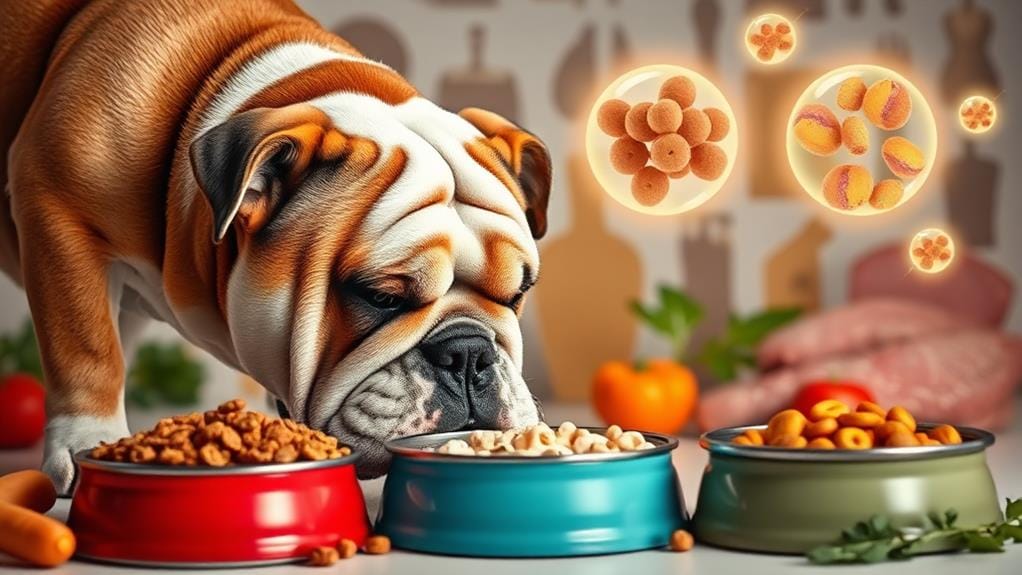
When selecting food for Bulldogs prone to gas, you'll need to take into account several essential factors. These include the digestibility of ingredients, the balance of fiber content, the quality of protein sources, the inclusion of probiotics, and the size of the kibble. By carefully evaluating these aspects, you can choose a food that may help reduce your Bulldog's gas issues while ensuring proper nutrition.
Digestibility of Ingredients
Given that Bulldogs are notorious for their gassy nature, selecting the right food with easily digestible ingredients is vital. When choosing a food for your Bulldog, focus on highly digestible proteins, such as those derived from chicken or fish. These protein sources can help reduce gas production and improve overall gut health, addressing the unique digestive challenges faced by Bulldogs.
Incorporating precise fibers into your Bulldog's diet is essential for proper digestion and minimizing unpleasant stool odors often associated with gas. Quality carbohydrates, like brown rice or beet pulp, can enhance nutrient absorption and support digestive efficiency in Bulldogs. These ingredients work synergistically to promote ideal gastrointestinal function.
To further reduce the likelihood of gas and digestive upset, opt for foods free from common allergens such as corn, soy, and wheat. These ingredients tend to be gentler on Bulldogs' stomachs, potentially alleviating gas-related issues. By prioritizing highly digestible, allergen-free ingredients in your Bulldog's diet, you're taking a proactive approach to managing their gas problems and supporting their overall digestive health.
Fiber Content Balance
Beyond focusing on digestible ingredients, striking the right fiber content balance is vital to managing your Bulldog's gas issues. The ideal dog food for your gassy Bulldog should contain a carefully balanced mix of soluble and insoluble fibers, aiming for a total fiber content of 3-5%.
Soluble fibers, such as beet pulp, play a significant role in gas reduction by:
- Forming a gel-like substance in the gut
- Slowing down digestion
- Promoting nutrient absorption
Insoluble fibers, like those found in brown rice, contribute to digestive health by:
- Adding bulk to stools
- Preventing constipation
- Reducing gas buildup
When selecting a dog food for your Bulldog, look for options that incorporate both types of fiber in appropriate amounts. It's important to introduce high-fiber diets gradually, as Bulldogs can be sensitive to sudden dietary changes. Monitor your dog's response to the new food, watching for improvements in stool consistency and reduced gas.
Protein Source Quality
Quality protein sources are the cornerstone of a gas-reducing diet for Bulldogs. When selecting food for your gassy Bulldog, you'll want to focus on high-quality proteins that are easily digestible. These proteins not only support muscle development but also minimize gastrointestinal distress and excessive flatulence.
Look for dog foods containing meat meals, such as chicken or lamb meal. These ingredients offer concentrated protein levels and essential nutrients without causing digestive upset. It's vital to avoid low-quality protein sources, including by-products and fillers, as these can be harder for Bulldogs to digest and may lead to increased gas production.
Consider the following when evaluating protein sources:
- Digestibility: Opt for easily digestible proteins to reduce gas.
- Concentration: Choose foods with concentrated protein sources for ideal nutrition.
- Avoid by-products: Steer clear of low-quality fillers that can cause digestive issues.
- Balance with fat: Confirm protein and fat levels are balanced to prevent exacerbating gas problems.
- Probiotics and prebiotics: Select foods that include these to promote a healthy gut microbiome.
Probiotic Supplementation
When selecting food for your gassy Bulldog, probiotic supplementation deserves serious consideration. These beneficial microorganisms can greatly improve your dog's gut health by balancing intestinal microbiota, potentially reducing gas and bloating. Research has shown that specific probiotic strains, particularly Lactobacillus and Bifidobacterium, enhance digestion and nutrient absorption, which may alleviate gastrointestinal discomfort in Bulldogs.
Incorporating probiotics into your Bulldog's diet offers several benefits:
- Supports immune system function
- Decreases frequency and intensity of flatulence
- Improves stool quality
- Reduces unpleasant odors
Given Bulldogs' unique anatomy and eating habits, which can predispose them to digestive issues, regular probiotic intake is essential. It promotes a healthier digestive environment, potentially leading to better overall digestive health. When choosing a dog food for your Bulldog, look for options that include probiotic supplementation or consider adding a high-quality probiotic supplement to their diet. Consult with your veterinarian to determine the most appropriate probiotic strains and dosages for your Bulldog's specific needs, ensuring ideal gut health and reduced gastrointestinal discomfort.
Kibble Size Considerations
Kibble size plays an essential role in managing gas issues for Bulldogs. When selecting food for your gassy Bulldog, consider the following factors:
- Jaw Structure Compatibility:
- Choose kibble designed for Bulldogs' unique jaw structures
- Look for shapes that facilitate easy pickup and chewing
- Opt for kibble sized to fit your Bulldog's short muzzle
- Prevent air swallowing during eating, which can cause gas
- Select wave-shaped kibble to encourage thorough chewing
- Avoid large pieces that may be swallowed whole
- Choose formulas with highly digestible proteins
- Guarantee precise fiber content for ideal digestion
- Select kibble size that promotes slower eating
- Minimize air intake during meals
- High-fat foods, which can slow digestion and increase gas production
- Dairy products, as many dogs are lactose intolerant
- Soy-based proteins, which can be difficult to digest
- Artificial additives and preservatives
- Excessive fiber sources, such as beet pulp or pea fiber
- Increased frequency or volume of gas
- Foul-smelling emissions
- Visible discomfort or bloating
- Changes in appetite or bowel movements
- Lethargy or decreased activity
Frequently Asked Questions
How Often Should I Feed My Gassy Bulldog?
You should feed your gassy bulldog two to three times a day, maintaining a consistent schedule. Adult bulldogs typically require two meals, while puppies may need three. Divide their daily recommended food portion accordingly. Avoid free-feeding, as it can lead to overeating and exacerbate digestive issues. Consult your veterinarian to determine the ideal feeding frequency based on your bulldog's age, weight, and activity level. Stick to regular mealtimes to help regulate their digestive system and potentially reduce gas.
Can Probiotics Help Reduce Gas in Bulldogs?
Probiotics can indeed help reduce gas in bulldogs. These beneficial bacteria support your dog's digestive system, promoting a healthy gut microbiome. By introducing probiotics to your bulldog's diet, you're enhancing their ability to break down food efficiently, which can lead to decreased gas production. You'll find probiotics in specially formulated dog foods, supplements, or even in natural sources like yogurt. However, it's important to consult your veterinarian before making any significant changes to your bulldog's diet.
Are There Specific Ingredients I Should Avoid for Gassy Bulldogs?
Yes, there are specific ingredients you should avoid for gassy bulldogs. These include:
Instead, opt for easily digestible proteins like chicken or fish, and moderate amounts of whole grains. Always consult with your veterinarian for personalized dietary recommendations tailored to your bulldog's specific needs.
What Are Signs That My Bulldog's Gas Is Abnormal?
While occasional gas is normal, you should be concerned if your bulldog's flatulence becomes excessive or accompanied by other symptoms. Watch for:
If you notice these signs persisting for more than a day or two, it's best to consult your veterinarian. They can determine if there's an underlying issue, such as dietary sensitivities, digestive disorders, or other health concerns.
Can Homemade Diets Effectively Reduce Gas in Bulldogs?
You've probably heard that homemade diets can work miracles for gassy bulldogs, but let's examine the facts. While homemade diets can effectively reduce gas in bulldogs, they require careful planning and veterinary guidance. You'll need to:
- Guarantee balanced nutrition
- Choose easily digestible proteins and carbohydrates
- Avoid common gas-producing ingredients