As an Amazon Associate, we earn from qualifying purchases. Some links on this site are affiliate links at no extra cost to you. Our recommendations are based on thorough research and editorial judgment.


5 Best Dog Foods for Bulldogs With Allergies: Vet-Approved Options

For Bulldogs with allergies, veterinarians often recommend specialized dog foods that address their unique sensitivities. Top choices include Royal Canin French Bulldog Adult Dry Dog Food, formulated for easy consumption and muscle support. Purina Pro Plan Sensitive Skin and Stomach Dog Food offers salmon-based protein and is free from common allergens. Royal Canin also provides options for Bulldog puppies, supporting immune system development and digestive health. Bully Max Small Breed Dry Dog Food features TruMune postbiotics for improved digestion. When selecting food, consider limited ingredient diets, novel protein sources, and grain-free options. These recommendations can greatly improve your Bulldog's health, but there's more to learn about optimizing their diet.
Key Takeaways
- Royal Canin French Bulldog Adult Dry Dog Food offers tailored nutrition with easily digestible proteins and specific fiber content.
- Purina Pro Plan Sensitive Skin and Stomach Dog Food contains real salmon and is free from common allergens like corn, wheat, and soy.
- Limited Ingredient Diets (LIDs) with novel protein sources like salmon or rabbit can reduce allergic reactions in Bulldogs.
- Grain-free options with alternative carbohydrates like sweet potatoes may alleviate skin issues and gastrointestinal discomfort in allergic Bulldogs.
- Dog foods with probiotics and omega fatty acids support digestive health, immune function, and skin condition in Bulldogs with allergies.
Royal Canin French Bulldog Adult Dry Dog Food (17 lb)
You may be interested



Worth flagging upfront: this formula is bred-specific to French Bulldogs, not Bulldogs generally, so it's the better match if that's the breed you own. The 17-pound bag targets dogs 12 months and older and leans on nutrients aimed at skin barrier support, which lines up with allergy-prone skin issues rather than food-allergy triggers themselves.
Key features of this dog food include:
- Customized kibble shape for French Bulldogs' short muzzles
- Protein and L-carnitine for muscle tone support
- Highly digestible proteins and precise fiber content
- Quality carbohydrates for healthy digestion
- Reduced flatulence and stool odor
Verdict: A good fit for adult French Bulldogs with skin sensitivities, though it's not formulated for English or British Bulldogs — check the puppy version below if you need a French Bulldog food for a younger dog.
Best For: French Bulldog owners seeking a specialized dry food to address allergies, support skin health, and maintain muscle tone in their adult dogs.
Pros:
- Tailored kibble shape for easy consumption by French Bulldogs
- Contains nutrients specifically formulated for skin barrier health
- Highly digestible ingredients to reduce flatulence and stool odor
Cons:
- Premium price point may be higher than generic dog food options
- Limited to one flavor (chicken), which may not suit all dogs' preferences
- Specific to French Bulldogs, not suitable for other breeds or mixed-breed dogs
Purina Pro Plan Sensitive Skin and Stomach Dog Food (Salmon and Rice)
Unlike the two Royal Canin options here, this one isn't breed-specific at all — it's built around a salmon and rice base meant for any dog with sensitive skin or a sensitive stomach. That makes it a reasonable pick if your Bulldog isn't a purebred French or English Bulldog, or if you'd simply rather rotate away from chicken-based proteins.
Key benefits for bulldogs include:
- Highly digestible formula for sensitive stomachs
- Omega-rich ingredients for skin and coat health
- Joint support from EPA (omega-3 fatty acid)
- Allergen-friendly: no corn, wheat, or soy
Verdict: A solid general-purpose option for allergy-prone Bulldogs of any type, and the 30-pound bag size makes it a practical choice for multi-dog households.
Best For: Bulldogs with sensitive skin, digestive issues, or food allergies seeking a high-quality, easily digestible diet that supports overall health and well-being.
Pros:
- Real salmon as the first ingredient provides high-quality protein and essential fatty acids
- Formulated without common allergens like corn, wheat, and soy
- Contains live probiotics to support digestive and immune health
Cons:
- May be more expensive than standard dog food options
- Some dogs may not prefer the taste of salmon
- The 30-pound bag size might be too large for owners of small bulldogs or those who prefer to buy smaller quantities
Royal Canin French Bulldog Puppy Dry Dog Food, 10.5 lb Bag
This is the puppy version of the first product on this list, so it's the pick if you're raising a French Bulldog puppy specifically rather than shopping for an adult dog or a different Bulldog type. The formula focuses on skin barrier nutrients and easy-chew kibble sizing for a puppy's developing jaw.
Verdict: Worth the premium price for a French Bulldog puppy with allergy concerns, though English or British Bulldog owners should look at the Royal Canin Bulldog Puppy formula below instead.
Best For: French Bulldog puppies aged 8 weeks to 12 months looking for a breed-specific, nutritionally balanced diet that supports healthy growth and digestion.
Pros:
- Specially formulated kibble shape for easy eating by French Bulldogs
- Contains antioxidants and nutrients that support immune system and skin health
- Highly digestible proteins help reduce gas and stool odor
Cons:
- Higher price point compared to standard puppy foods
- Some customers received smaller quantities than expected due to packaging issues
- Limited to a specific age range and breed, not suitable for adult dogs or other breeds
Royal Canin Bulldog Puppy Dry Dog Food, 30 lb bag
This is the one to reach for if you specifically own an English or British Bulldog puppy rather than a French Bulldog — the two Royal Canin formulas above are French Bulldog-specific and won't match this breed's jaw shape or growth pattern. The 30-pound bag covers a longer growth window (8 weeks to 15 months) than the French Bulldog puppy formula.
Verdict: The right choice for English or British Bulldog puppies with allergy concerns; plan to switch to the adult formula once your dog passes 15 months.
Best For: Bulldog puppy owners seeking a breed-specific, nutritionally balanced dry food designed to support their pup's growth and development from 8 weeks to 15 months.
Pros:
- Tailored kibble shape for Bulldog's unique jaw structure
- Promotes immune system development and healthy digestion
- High customer satisfaction with 4.7-star rating
Cons:
- Premium price point compared to generic puppy foods
- Limited to a specific age range (8 weeks to 15 months)
- May require transition to adult formula after 15 months
Bully Max Small Breed Dry Dog Food (Chicken & Rice, 5 lbs)
This one breaks from the Royal Canin/Purina pattern above by targeting small-breed digestion specifically rather than allergies or breed type. The chicken and rice recipe uses small, soft kibble and TruMune postbiotics aimed at digestive support, which can indirectly help Bulldogs whose allergy symptoms show up as stomach upset.
Key benefits include:
- Balanced nutrition for skin, coat, and digestive health
- Omega 3 and 6 fatty acids for brain function and immune support
Verdict: Reasonable if your Bulldog's allergy symptoms lean toward digestive upset, but introduce it gradually and watch for adverse reactions since results appear to vary by dog.
Best For: Bulldogs with sensitive stomachs or digestive issues, as well as small breed dogs seeking a nutrient-rich diet with digestive and immune support.
Pros:
- Contains TruMune postbiotics for improved digestive health and immune response
- Small, soft kibble designed for easy chewing and digestion by small breeds
- Made in the USA with high-quality ingredients and zero recalls
Cons:
- Some dogs may experience adverse reactions or digestive issues
- Higher price point compared to standard dog food options
- Kibble size may still be challenging for certain small breeds
Factors to Consider When Choosing Food for Bulldogs With Allergies
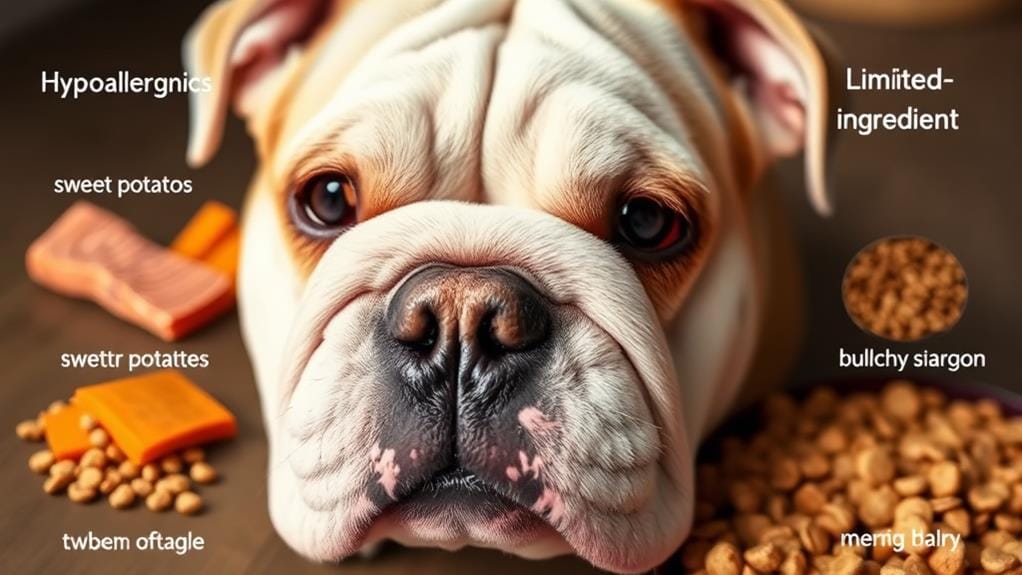
When selecting food for Bulldogs with allergies, you'll need to contemplate several essential factors. First, familiarize yourself with common Bulldog allergens and explore limited ingredient diets that can help pinpoint and avoid triggers. Additionally, carefully evaluate protein sources, grain-free options, and formulas that support digestive health to tailor your Bulldog's diet to their specific needs.
Common Bulldog Allergens
Allergy-prone Bulldogs often face challenges when it comes to their diet. These beloved companions are particularly susceptible to various allergens, both in their food and environment. Common food allergens for Bulldogs include:
- Beef
- Chicken
- Dairy products
- Grains
These ingredients can trigger skin irritations and gastrointestinal issues in sensitive Bulldogs. Environmental allergens, such as pollen, dust mites, and mold, can also cause allergic reactions, leading to itching and inflammation.
When a Bulldog experiences food allergies, you may notice symptoms like:
- Chronic ear infections
- Excessive scratching
- Digestive upset
To address these issues, it's vital to evaluate hypoallergenic diets or limited ingredient formulas. These specialized foods often exclude common allergens, helping to minimize adverse reactions in your Bulldog.
Regular veterinary consultations are fundamental for identifying specific allergens affecting your Bulldog. Your vet may recommend elimination diets or allergy testing to pinpoint the exact triggers. This approach guarantees that you can provide tailored nutrition for your Bulldog, addressing their unique sensitivities and promoting peak health.
Limited Ingredient Diets
A lifeline for allergy-prone Bulldogs, limited ingredient diets (LIDs) offer a simplified approach to nutrition. These specialized formulas typically feature a minimal number of high-quality ingredients, reducing the risk of triggering allergic reactions in sensitive dogs. When selecting an LID for your Bulldog, consider the following factors:
- Protein source: LIDs often focus on a single, novel protein such as salmon or rabbit, which can help identify and eliminate allergens.
- Carbohydrate content: Easily digestible carbohydrates like sweet potatoes or peas are common in LIDs, supporting digestive health.
- Added nutrients: Many LIDs include supplements and probiotics to support skin health and digestive function, addressing common allergy-related issues.
- Changeover period: Monitor your Bulldog's response to the new food, as it may take several weeks to see improvements in allergy symptoms.
- Veterinary consultation: Before starting an LID, consult with your veterinarian for tailored recommendations based on your Bulldog's medical history and specific allergens to avoid.
Protein Source Selection
Protein selection plays an essential role in managing allergies for Bulldogs. When choosing a food for your allergic Bulldog, consider opting for novel or less common protein sources, such as salmon or duck. These alternatives can help prevent allergic reactions often associated with more common proteins like chicken or beef.
Look for high-quality protein sources listed as the first ingredient, preferably real meat or fish. These can support skin health and coat condition, which is vital for Bulldogs prone to allergies. Additionally, focus on the digestibility of the protein source. Highly digestible proteins can reduce gastrointestinal issues, including gas and stool odor, which are common in Bulldogs.
Consider protein sources enriched with omega fatty acids, such as those found in fish oil. These can aid in managing skin allergies and promoting a healthy coat. Proteins supplemented with probiotics are also beneficial, as they support digestive health and bolster the immune system.
Grain-Free Options
Increasingly, grain-free options have become popular for Bulldogs with allergies. These formulations exclude common allergens like wheat, corn, and soy, which can trigger sensitivities in some Bulldogs. Instead, they often incorporate alternative carbohydrate sources such as sweet potatoes, peas, and lentils. These ingredients provide digestible energy without the potential allergenic effects of grains.
When considering grain-free options for your Bulldog, keep in mind:
- Balanced nutrition: Verify the food contains appropriate levels of protein and fat to meet your Bulldog's nutritional needs.
- Alternative carbohydrates: Look for easily digestible sources like sweet potatoes or legumes.
- Potential benefits: Some studies suggest grain-free diets may help alleviate skin issues and gastrointestinal discomfort in sensitive dogs.
Before shifting to a grain-free diet, consult with your veterinarian. They can help identify specific allergens affecting your Bulldog and recommend appropriate food options. A professional assessment will confirm the chosen grain-free formula meets your dog's unique dietary requirements while addressing their allergy concerns. This personalized approach can help optimize your Bulldog's health and well-being.
Digestive Health Support
While grain-free options can benefit some Bulldogs with allergies, addressing digestive health is equally important. When selecting food for your Bulldog, consider formulas that support digestive well-being. Look for highly digestible proteins and specific fiber content, which can minimize gastrointestinal distress and reduce flatulence—common issues in Bulldogs.
Opt for dog foods enriched with probiotics to support beneficial intestinal bacteria. This can enhance your Bulldog's digestive health and overall immune response. Additionally, seek out formulas that contain omega fatty acids, which not only promote skin and coat health but also contribute to digestive well-being.
Choose foods with high-quality carbohydrates like rice and oatmeal. These are easier for Bulldogs to digest and can help prevent stomach upset. Pay close attention to fiber content, as a specific balance aids in maintaining proper digestion and reducing unpleasant stool odors.
When evaluating dog food options:
- Check for easily digestible protein sources
- Confirm the presence of probiotics
- Look for omega fatty acid content
- Verify the inclusion of high-quality carbohydrates
- Monitor fiber levels for ideal digestive support
Frequently Asked Questions
Can Bulldogs With Allergies Eat Raw Food Diets?
Raw food diets can be an option for bulldogs with allergies, but you should approach them with caution. While they may help some dogs, raw diets carry risks of bacterial contamination and nutritional imbalances. It's essential to consult your veterinarian before making this dietary change. They can help you determine if a raw diet is appropriate for your bulldog's specific allergies and overall health needs. Always prioritize balanced nutrition and food safety when considering any new diet for your pet.
How Often Should I Switch My Bulldog's Food to Prevent Allergies?
Switching your bulldog's food frequently isn't recommended to prevent allergies. Instead, focus on identifying and avoiding specific allergens. If you suspect food allergies, work with your veterinarian to conduct an elimination diet. Once you've found a suitable food that doesn't trigger allergies, stick with it. Changing foods often can actually upset your dog's digestive system and make it harder to pinpoint allergens. If a change is necessary, shift gradually over 7-10 days to avoid gastrointestinal issues.
Are Grain-Free Diets Necessary for Bulldogs With Allergies?
Contrary to popular belief, grain-free diets aren't always necessary for bulldogs with allergies. In fact, grains are rarely the culprit. You should focus on identifying the specific allergen affecting your dog, which is often a protein source. Consult your veterinarian for proper allergy testing and dietary recommendations. They may suggest novel protein diets or hydrolyzed protein foods as more effective alternatives to grain-free options.
What Supplements Can Help Bulldogs With Food Allergies?
Several supplements can aid bulldogs with food allergies:
- Omega-3 fatty acids: You'll find these in fish oil, which can help reduce inflammation and improve skin health.
- Probiotics: These support gut health and may strengthen your bulldog's immune system.
- Quercetin: This natural antihistamine can alleviate allergy symptoms.
- Digestive enzymes: They'll assist in breaking down food, potentially reducing allergic reactions.
- Vitamin E: It's an antioxidant that supports skin health.
Always consult your veterinarian before adding supplements to your bulldog's diet.
Can Environmental Allergies Affect a Bulldog's Food Sensitivities?
Environmental allergies can indeed affect your bulldog's food sensitivities. When your dog's immune system is already overreacting to environmental allergens, it may become more sensitive to certain food ingredients. This heightened state of reactivity can lead to:
- Increased food intolerances
- Exacerbation of existing food allergies
- Development of new food sensitivities
It's essential to work with your veterinarian to identify and manage both environmental and food-related allergies in your bulldog.