As an Amazon Associate, we earn from qualifying purchases. Some links on this site are affiliate links at no extra cost to you. Our recommendations are based on thorough research and editorial judgment.

How to Kennel Train a French Bulldog Puppy

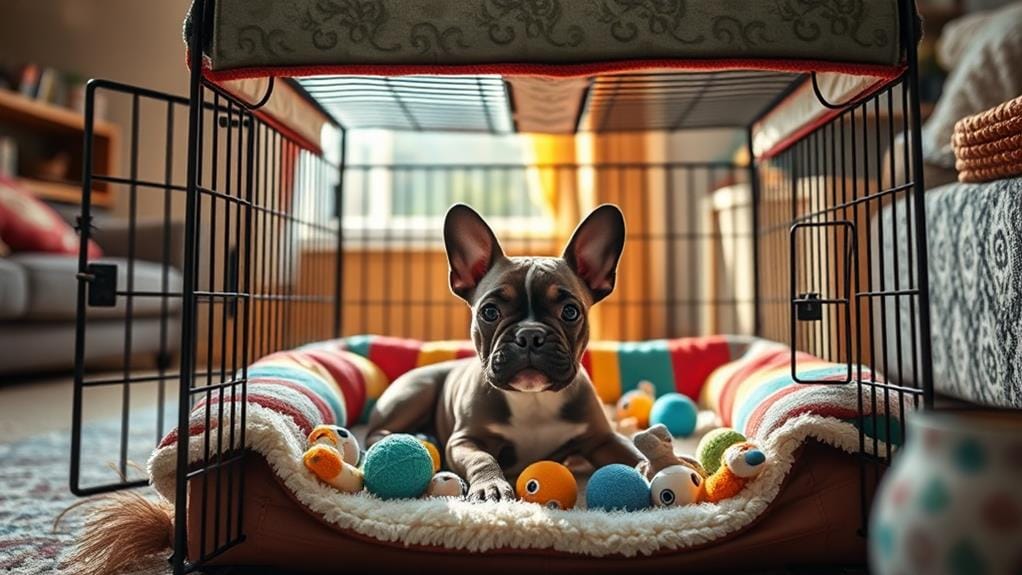
To kennel train your French Bulldog puppy, start by choosing the right crate size and type, ensuring it’s comfortable and secure. Gradually acclimate your puppy by introducing the crate with treats and toys, and maintaining short time intervals initially. Use positive reinforcement techniques such as high-value treats and praise to encourage calm behavior inside the crate. Establish a consistent routine for potty breaks, taking your puppy outside every 1-2 hours. Monitor for signs of anxiety, adjusting your methods as needed. Building comfort and trust is essential for successful kennel training and will promote a secure environment for your puppy. Further strategies can enhance this process.
Key Takeaways
- Choose the right-sized crate to ensure your French Bulldog puppy feels secure and comfortable during training.
- Use positive reinforcement techniques like treats and praise to create a positive association with the crate.
- Gradually acclimatize your puppy to the crate by starting with short periods and increasing time as they grow comfortable.
- Establish a consistent potty routine, taking your puppy outside every 1-2 hours to aid in potty training.
- Monitor your puppy’s behavior for signs of anxiety or discomfort, adjusting training techniques as needed for their well-being.
Understanding Crate Training Benefits
You may be interested

When you kennel train your French Bulldog puppy, you’re not just providing a place for them to sleep; you’re creating a safe, den-like environment that taps into their natural instincts. Crate training offers numerous benefits, including:
- Potty Training Aid: Puppies instinctively avoid soiling their sleeping area, helping them learn to hold elimination longer.
- Safe Space: A crate protects your puppy from potential injuries and destructive behaviors when unsupervised.
- Mental Stimulation: French Bulldogs are curious and intelligent, so a cozy space engages their minds.
- Routine Establishment: Proper crate training fosters a sense of security by providing structure, reducing separation anxiety.
Choosing the Right Crate
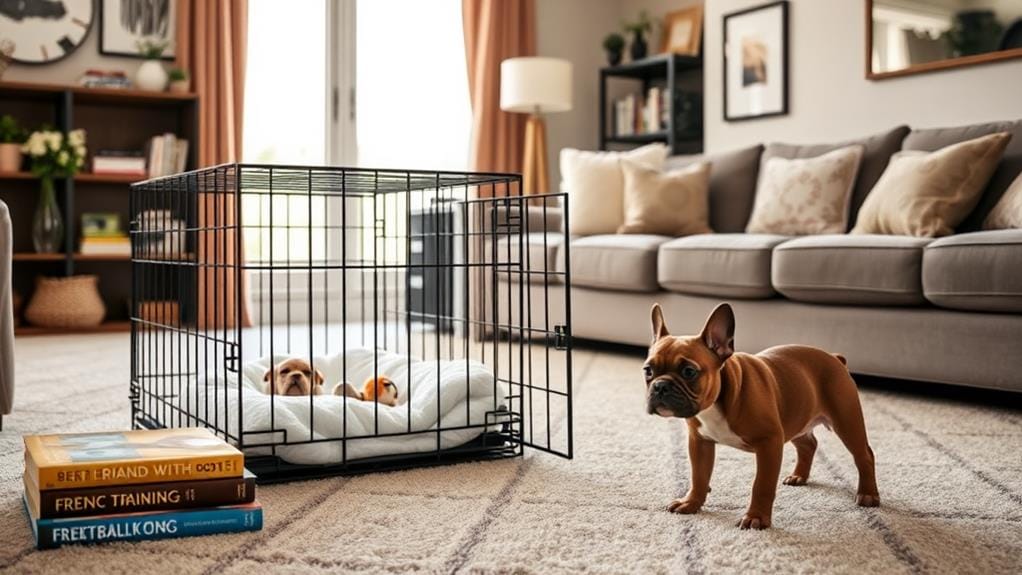
Selecting the right crate for your French Bulldog puppy is essential for successful kennel training. When choosing, keep these key points in mind:
- Size: Opt for a crate that suits your puppy’s adult height, typically 11 to 13 inches. It should allow your pup to stand and turn around comfortably.
- Type: You can choose from wire crates for ventilation, plastic crates for security, or soft crates for travel, depending on your needs.
- Comfort: Include a soft blanket and chew toys, enhancing the crate’s appeal and making it a cozy space.
- Portability: If you travel, select a lightweight crate that still provides a safe environment, ensuring your puppy feels secure.
Making the crate a place for good behavior is pivotal in your training journey.
Recommended Products

A win-win solution: The FXW Dog Playpen is designed to bring a win-win solution to you and your lovely dog. Different from a narrow enclosure cage or kennel, the FXW dog pen provides a spacious semi-open activity area specifically for your dog. Your dog will have fun in its safe and sturdy kingdom. Meanwhile, you can take a real break and be truly relaxed without worrying about your beloved pet. Fun, Relaxation and Well-being is the orientation of the FXW team.

【Upgraded Dog Playpen】Dog playpen indoor adopts gravity door lock design, much safer and more convenient. Made of heavy-duty metal panels and stakes with black coating, non-toxic, anti-rust. Ensures long-time use no matter indoor or outdoor.
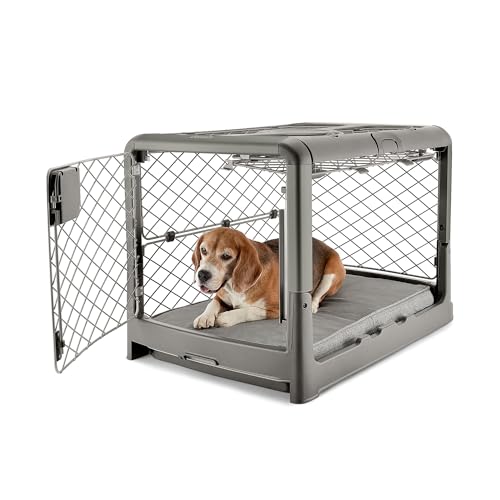
AWARD-WINNING PREMIUM CRATE: Revol is our ultimate collapsible dog crate offering superior design with uncompromising safety and functionality. Built to baby industry safety standards with premium materials, Revol transforms from functional training tool to stylish home furniture that actually enhances your decor.
Steps for Effective Crate Training
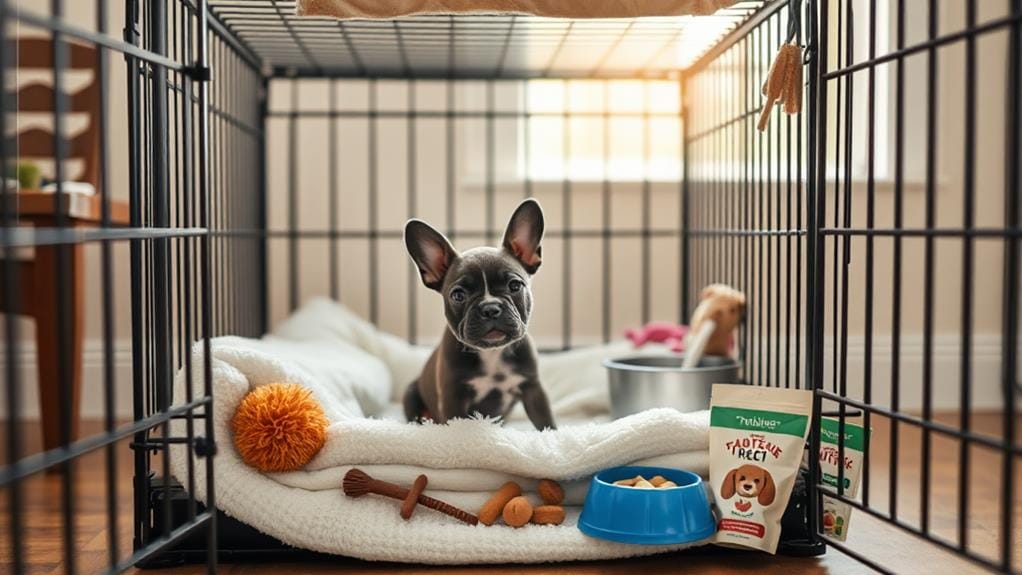
When it comes to effective crate training for your French Bulldog puppy, there are several key steps you should follow. First, selecting the right crate size is essential to guarantee your puppy feels secure and comfortable. Next, employing positive reinforcement techniques and a gradual acclimatization process will help your puppy associate the crate with safety and reward, making the training experience more successful.
Recommended Products

Homey Pet Dog Crate Bank Includes: 4 Pack Three tiers stackable dog crate. Each unit comes with 4 x Lockable Casters, 2 x Steel Bowls, 1 x Door Lock (Pre-installed), 1 x PP Tray, 2 x Metal Floor Grids, 1 x Tray Guard, 2 x Open-Top Securing Screws, 2 x Floor-Grid Fixing Screws, and all required assembly screws

Sturdy Integrated Design: Our six packs two-tier 31 inch dog crate for small dogs features an integrated design, providing exceptional stability and reducing the tipping or wobbling. The overall dimensions of two-tier are 31"L x 20.3" Wx 45.67"H, with each tier measuring 18.1" in height, accommodating pets up to 45 pounds per tier. This vertical space-saving design is ideal for breeders, kennels, multi-pet households, pet hospitals, and groomers
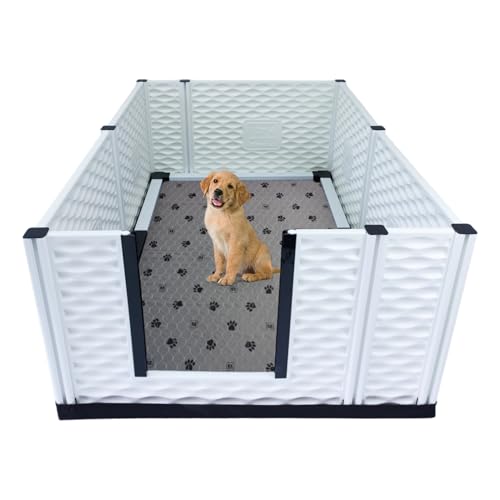
PUPPY WHELPING SUPPLIES: The EZclassic tall extra-large whelping box offers a comfortable sanctuary for mother and puppies. It’s made of tough plastic and has a high-walled build and internal rails to increase litter safety. It comes with a heavy-duty canvas floor liner and a washable whelping pad and has interior dimensions of 48" x 76" x 28".
Selecting the Right Crate
Finding the right crate for your French Bulldog puppy is essential for effective crate training. A well-chosen crate guarantees your pup feels comfortable and safe, creating a positive experience as they adjust to their new environment.
- Choose a size that allows them to stand, turn, and lie comfortably.
- Consider a wire crate for ventilation, or a plastic one for security.
- Add a cozy pad or bed to enhance comfort.
- Place it in a quiet, family-oriented location for a sense of inclusion.
- Monitor the crate’s size and adjust it as your puppy grows.
Positive Reinforcement Techniques
Three key positive reinforcement techniques can make crate training your French Bulldog puppy both effective and enjoyable.
- High-Value Treats: Use high-value treats to motivate your puppy. Reward them immediately when they enter the crate or exhibit calm behavior inside.
- Clicker Training: Incorporate clicker training to reinforce desired actions. A click sound followed by a treat helps establish a positive association with crate entry.
- Praise and Comfort: Celebrate small milestones with praise and treats. This builds your puppy’s confidence and comfort level, making the crate a safe space.
Incorporate playtime near the crate and feed your puppy inside to further enhance their positive association. Consistency and immediate rewards in your training techniques will strengthen their learning.
Gradual Acclimatization Process
Crate training your French Bulldog puppy requires a thoughtful approach to help them feel secure and comfortable in their new space. Start by introducing the crate positively, using treats and toys. Gradually increase the time your puppy spends inside, beginning with short periods and extending them as they adjust. Position the crate in a frequently used area of your home to promote a sense of safety and inclusion.
- Monitor comfort levels closely
- Use positive reinforcement, praising calm behavior
- Adjust crate size to prevent anxiety
- Create a cozy environment with blankets and toys
- Allow exploration at their own pace
This gradual acclimatization process fosters a positive association with the crate, making it a safe haven for your puppy.
Potty Training Techniques
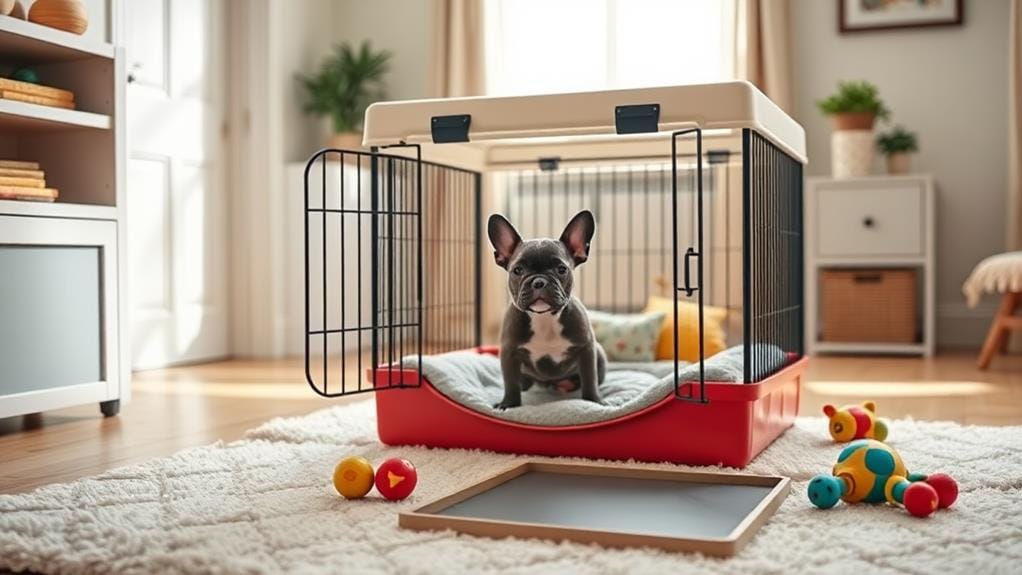
Potty training your French Bulldog puppy can be a straightforward process if you establish a consistent routine early on. Start by taking your Frenchie outside every 1-2 hours, especially after meals and before bedtime, to encourage regular elimination habits.
- Use positive reinforcement immediately after your puppy goes potty in the designated potty area; treats and praise will strengthen this desired behavior.
- Monitor your puppy for signs indicating the need to go out, like sniffing or whining, and respond quickly to prevent accidents.
- Clean any indoor accidents thoroughly with enzyme cleaners to eliminate odors.
- Gradually increase the time between potty breaks as your puppy learns to hold its bladder, extending intervals by 10 minutes every few days.
With patience and consistency, your training efforts will pay off.
Addressing Common Challenges
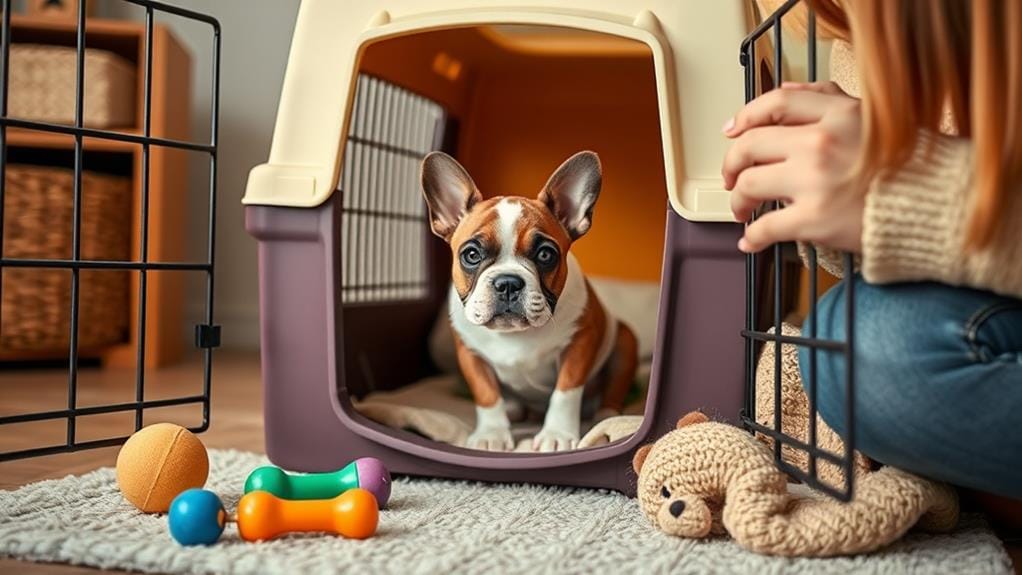
Addressing common challenges in kennel training your French Bulldog puppy is essential for success. You may encounter issues like separation anxiety, stubbornness, and crate comfort, which can hinder the training process. By implementing targeted strategies and adjustments, you can foster a positive environment that encourages your puppy to embrace the crate as a safe space.
Recommended Products

[Dogs Love Their Crates] The purpose and function of a dog kennel are to provide enough space for your dog to move around/rest. It's probably the place in the house that is truly theirs, where they can be undisturbed and feel safe.

Puppy Playpen w/ adjustable & elevated 1/2 inch wire mesh floor grid, measures 48L x 48W x 30H inches
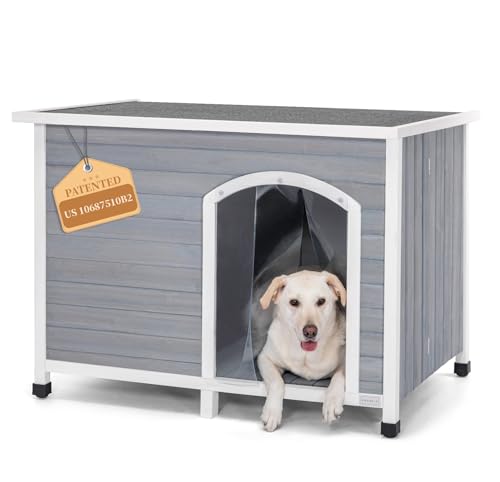
[No tools required] No need for complicated installation steps, simply unfold to get a high-quality dog house outdoor that is ready to use. The door flap can be installed as needed. When not in use, the dog house can be easily folded and stored, taking up minimal space and allowing for easy mobility.
Separation Anxiety Solutions
Often, French Bulldog puppies can struggle with separation anxiety, making kennel training a challenge. To help your puppy feel safe and secure during crate time, consider these strategies:
- Gradually introduce the crate, starting with short periods.
- Use positive reinforcement, offering treats and praise for calm behavior.
- Create a cozy space with soft bedding and chew toys for comfort.
- Establish a consistent routine that includes regular potty breaks.
- Monitor for signs of anxiety, like barking or destruction.
Stubbornness Management Techniques
While helping your French Bulldog puppy cope with separation anxiety, you might notice a touch of stubbornness in their personality. To effectively manage this, remember to be patient and consistent.
- Positive Reinforcement: Use high-value treats to motivate your puppy, as they respond better to rewards than punishment.
- Small Manageable Steps: Break training into smaller tasks, allowing your puppy to succeed before advancing.
- Short, Frequent Sessions: Opt for brief, regular training sessions throughout the day to prevent overwhelm.
- Monitor Progress: Keep track of their development, adjusting techniques as needed.
- Celebrate Achievements: Acknowledge and celebrate small milestones to build confidence and crate a positive experience.
Crate Comfort Adjustments
Creating a comfortable environment in the crate is essential for helping your French Bulldog puppy feel secure and relaxed. Here are some crate comfort adjustments to take into account:
- Verify the crate is the appropriate size, allowing your puppy to stand and turn around comfortably.
- Use soft bedding and safe toys to create a cozy environment that encourages acceptance of the crate.
- Gradually increase crate time, rewarding calm behavior with treats and praise to help them acclimate.
- Position the crate in a quiet, familiar area to reduce stress and foster relaxation.
- Regularly clean the crate with enzyme cleaners to eliminate odors, preventing repeated accidents.
Building Comfort and Trust
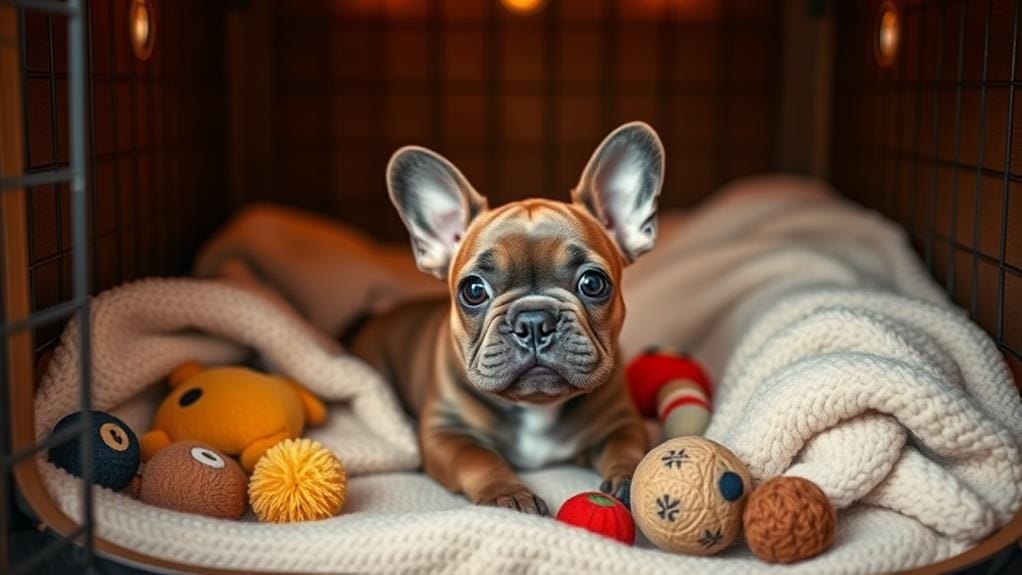
To help your French Bulldog puppy feel at ease in their crate, it’s important to gradually acclimate them to the space, transforming it from a potential source of anxiety into a cozy retreat. Use positive reinforcement, like treats and praise, to create a welcoming atmosphere. Encourage your puppy to explore the crate with their favorite toys and a soft blanket, reinforcing their sense of comfort and security.
Avoid using the crate as a punishment, as it can lead to negative associations and increase separation anxiety. Instead, monitor your puppy’s behavior closely, adapting your training methods to guarantee they feel safe. Building trust takes time, but with patience and consistency, your puppy will view the crate as their personal sanctuary.
Frequently Asked Questions
Are French Bulldogs Easy to Crate Train?
Yes, French Bulldogs can be easy to crate train. Focus on puppy comfort, the ideal crate size, and creating a routine. Use positive reinforcement consistently, but be mindful of potential crate training challenges and time management.
How to Train a French Bulldog to Sleep in a Crate?
When you train your Frenchie to sleep in a crate, focus on crate comfort. Use positive reinforcement, chew toys, and create a crate schedule. Establish a nighttime routine for puppy acclimation and build a safe space for them.
How Do I Get My French Bulldog to Stop Crying in His Crate?
To help your French Bulldog stop crying, focus on crate comfort and gradual introduction. Use calming techniques, positive reinforcement, and distraction methods during crate duration. Establish a nighttime routine to ease puppy anxiety and strengthen crate association.
Why Does My Frenchie Keep Peeing in His Crate?
You wouldn’t let a baby sleep in a too-big crib, right? Your Frenchie might be peeing in his crate due to potty training challenges, crate size importance, or anxiety triggers. Try consistent schedules and reward-based methods!